
The Leader as Editor.
Giving feedback that lifts the work without taking it over.
- AI
- Design

Nate Wearin
The Fuego Team
8.4.26
Someone on my team brings me an iteration of the work. Within a few seconds I can see a handful of things I'd do differently, and there's a pull, right then, to reach in and start fixing. It feels like help. It feels like the fastest way to make the work better.
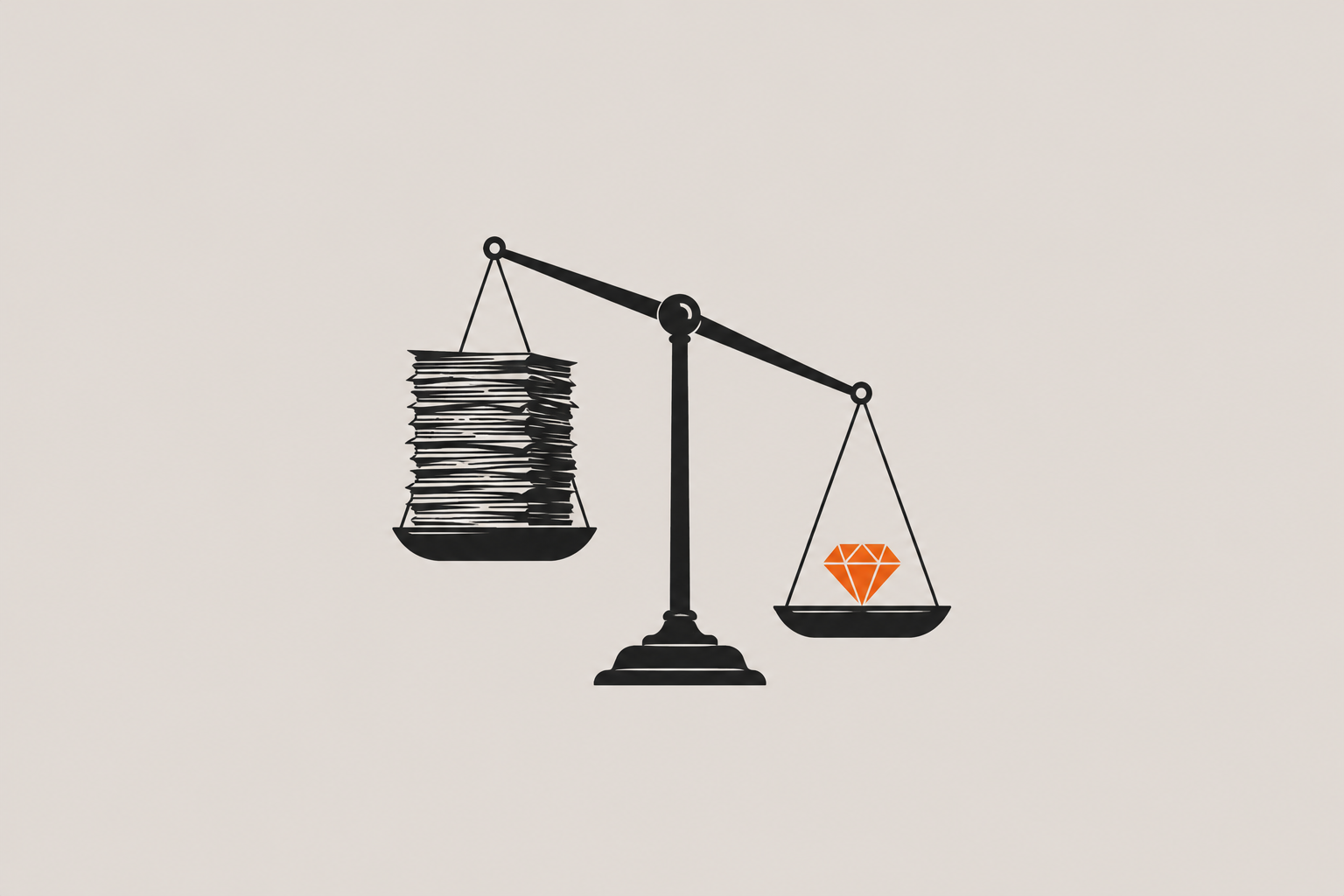
But that pull is worth resisting. If I take the pen, I get a better draft today. What I get tomorrow is a more hesitant maker, someone who brings me smaller, safer work next time, already shaped to what they think I want. If instead I hand the thinking back, the draft in front of me might stay rougher for another round. But their judgment gets sharper every time. Same moment, two very different outcomes.
Why guiding beats fixing
Here's why that matters more than it looks. When you hand someone the answer, something quiet happens: the part of them that generates original ideas switches off. They stop reaching past the obvious because they don't need to anymore. You've drawn a box, and now they work inside it. Do this enough and it becomes a habit on both sides. The team brings you safe drafts and waits to be told what you want. You've trained dependence without meaning to.
Feedback that engages their thinking does the opposite. It keeps them reaching, and makers who keep reaching get braver and sharper every cycle. There's another reason to protect this. The best work is rarely one person's anyway. It comes from a group thinking well together, building on each other, catching what any one person would miss. Your job as the leader isn't to install your answer into the work. It's to keep that shared thinking alive, because that's where better work over time actually comes from.
Open door, high bar, and how you say it
It's easy to think the choice is between being demanding and being empowering, like you have to pick one. You don't. A good editor isn't soft. They hold a high bar and know the craft cold. The difference is where they point all of that: not at making the work look like what they would have made, but at making it the best version of what the maker is reaching for. Open mind about the path, firm about the bar.
And how you say it is part of the craft, not a nicety on top of it. Shooting down an idea, or getting sharp with the person behind it, shuts down the exact thinking you're trying to grow. People don't reach when they're bracing for a hit. You can hold a high standard and still be warm about it. In fact you have to, because the goal of a piece of feedback isn't just to fix this draft. It's to leave someone more motivated to go again, not deflated. Expertise handed over as encouragement travels a lot further than the same expertise handed down as a verdict.
Three ways to guide without taking over
So how do you guide without taking over? A few moves I come back to.
Ask before you tell. A question puts the thinking back in their hands: what problem is this solving? What did you rule out to get here? Often they find the gap themselves before you have to name it, and it's theirs when they do.
Offer options, not a verdict. Instead of the one right answer, give two or three directions and let them choose. It keeps the decision theirs, and more than once the choice they make surfaces a fourth option none of us had at the start.
Frame your expertise as an offer. "One thing I'd try..." lands differently than "do this." It hands them something they can pick up or set down, which keeps them the author even when the idea is yours.
The thread running through all three: guide the thinking, keep the pen in their hand.
What this looks like in practice
I've watched this play out for years leading designers and researchers. The work that got braver and better over successive rounds was almost always the work where the feedback named the standard and the problem, then left the solving to the maker. The work that went flat was the work that got redlined into compliance. There's a timing piece to this too. Everyone wants it faster, and speed matters, but real strategic thinking sometimes needs the deadline to move so an idea can be tested and pushed into something better. Thinking can come fast or slow. Part of the job is protecting the time it takes to get to the stronger answer instead of trading it away for the quicker one.
Growing people
The leader's job isn't to get their fingerprints on the work. It's to raise the team's ceiling, so the work keeps getting better even when you're not in the room. That means holding a real bar without micromanaging it, forcing it, or quietly lowering it. You can still bring ideas, still hand off a direction, as long as it opens things up instead of closing them down. The quiet difference is between managing output and growing people. The best editors I know are really in the second business.
From research and strategy to design and development, we help teams create digital experiences grounded in real user needs.
Let's chatFAQ
View AllGuide the thinking instead of supplying the answer. Ask before you tell, offer two or three directions rather than one verdict, and frame your expertise as an offer — "one thing I'd try" rather than "do this." Each move keeps the decision with the maker, which is what keeps them the author of the work even when the idea came from you.
Because you're trading tomorrow for today. Handing someone the answer switches off the part of them that generates original ideas — they stop reaching past the obvious because they no longer need to. Do it enough and both sides settle into the habit: the team brings safe drafts and waits to be told what you want. You've trained dependence without meaning to.
Yes — those aren't opposites. A good editor isn't soft; they know the craft cold and hold a real standard. The difference is where they aim it: not at making the work look like what they would have made, but at making it the best version of what the maker is reaching for. Open mind about the path, firm about the bar.
It's part of the craft, not a nicety layered on top. People don't reach when they're bracing for a hit, so shooting down an idea shuts down the exact thinking you were trying to grow. The goal of a piece of feedback isn't to fix this draft — it's to leave someone more motivated to go again. Expertise handed over as encouragement travels further than the same expertise handed down as a verdict.